Tuesday, April 22, 2014

Class Reflection


It seems that we didn't start Consumer Behavior all that long ago. When Graham asked us to post what we leaned this semester, I can sum it up in one word: perspective. There are so many underlying roots and theories to decision making. Not to mention how consumers react to the market place. Consumer behavior really opened my eyes and gave myself a whole new perspective on consumers, how we operate, and relate to the world.

Although we live around them everyday, I never really took time to think and process situations, such as why we always over eat during holidays or why"buy one get one free" sales are more exciting. The books, especially Predictably Irrational, really showed how consumers behave in the market place and just in life. Consumers really are predictable in a lot ways despite all our differences.

Overall, I have gained a perspective of the roots of decision making for consumers. In the future, it will be very important to use these new fundamentals to create leading sales, appealing marketing, a profitable business, and how to be a smart consumer.

Monday, April 21, 2014

I am not a hoarder!


Some of you may have see the show from TLC titled "Hoarding: Buried Alive" which documents people collecting so many items that their house becomes uninhabitable from the amount of clutter. These hoarders collect everything from complete junk to brand new items.

It is amazing to see people's lives come to ruin from material possessions. Whether it is eviction, condemning of a home, or the distancing of family and friends, these hoarders will go to the absolute breaking point for this addiction. Some people will have absolute breakdowns when their prized collection of garbage bags and empty soup cans are thrown away.


How on earth do people get so attached to such junk? Some of it may have to do with the extended self principle. Many people start hoarding after a traumatic life event. Gathering these possessions gives them a feeling of comfort and belonging that becomes part of their persona.

This just shows how the potential of power associated with the extended self. Even going home during Easter, I was amazing by the "junk" that was in my room. Yet I couldn't bring myself to throw it away! I do not consider myself a hoarder, but I was amazed how attached I am to some items that I forgot even existed.

Who knew the extended self would get in the way of spring cleaning...

The Abundance of Choice


In the Paradox of Choice, it talks about the abundance of choices. One of the examples of over abundance included students sampling chocolate. The first group tasted a small amount of chocolate while the second group sampled a large amount. These students were then asked to pick a favorite and rate how much they preferred it over the others. Lastly, they were asked if they would be willing to purchase any chocolate. Surprisingly, the second group that sampled the large amount of chocolate rated their favorite lower then the first group. Also, they were less likely to purchase chocolate. The second groups' favorites were never negative, just less favorable.


One would think that more choices would yield a higher rating, because the students could find a specific chocolate that is more tailored to their taste. However, with less options to choose from, it created a higher marginal utility for the students which caused a higher rating.

Is this true that less is always more? Maybe to a point. There is always someone who is overwhelmed by the number of choices while another is unsatisfied. For example, my dad just wants regular jeans and doesn't understand why there are so many to choose from. Myself on the other hand, can go in an entire store and not find a single pair of jeans.

This theory leaves marketers and companies in a tough spot. How many options are too many? Honestly, there is probably never a correct number well at least not for long, because consumers are constantly changing. Overall, the abundance of choice is just another paradox for marketing majors to decipher.

Market and Social Norms


It was interesting hearing about the differences between social and market norms in society. As a refresher, social norms include friendly  favors  that are  non-monetary , while market norms are payments in monetary amounts.

After reading this section in Predictably Irrational, I really started thinking about the differences between these norms. If I am ever doing a favor for a friend, I prefer to be paid with a favor or gift such as a drink or dinner. In the book they used an example of a dinner party as a social norm situation. It is always polite to bring over a desert or bottle of wine to a dinner party. This shows the host that you are contributing and care about the dinner's success. However, it would be extremely rude to pay the cook for dinner, which would be a market norm. Although the bottle of wine may have been cheap and not come close to the actual value of the dinner, it is much better received and appreciated.

This concept of social norms are very strange, yet understandable. Even as a poor college student, I would even prefer a cheap bottle of wine instead of a monetary amount for a dinner party. How do these forms even originate?

From a personal stand point, it is very hard to place a monetary value on an intangible service or act of kindness or rudeness for that matter. This is some of the reasoning for social norms. Instead of trying to calculate the value of something intangible, it is efficient to return the social norm with a intangible response. Although we can easy look at the receipt for the bottle of wine, it would not measure the care or effort the person spent picking out it out.

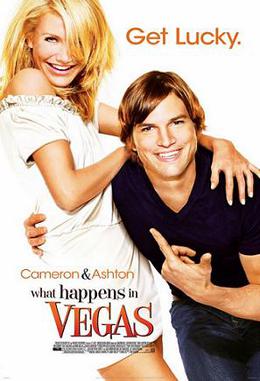
Social norm understanding can lead to solving problems, especially in the customer service industry. If you have ever seen  "What Happens in Vegas", I am sure you remember the part when Ashton Kutcher and Cameron Diaz first meet when their room gets double booked. When the front desk tries to solve the mishap, they don't say "This caused you this dollar amount of trauma, so here is a compensation of equal value." This would be a completely rude and ineffective way to solve the problem, because the guest would probably not agree on a monetary amount of trauma. Instead, the front desk compensated them with fancy hotel rooms and VIP packages to clubs and events. This option makes the guest, Ashton Kutcher and Cameron Diaz, much happier and avoids the topic of agreeing on a monetary value.

Overall, sticking to social norms can save people a lot of trouble. It can also improve relationships with friends and co-workers. When a problem arises it may be more effective to solve it with a more intangible product than a monetary amount.

Sunday, April 20, 2014

Eating with the Nudge


The Nudge mentioned that the consumption of a particular food can change by as much as 20%-30% if placed at the front of a buffet. Currently I work for a catering company, and I see this "nudge" principle in affect quite frequently.

It is hilarious to see people pile food on their plate at the start of the buffet. Then once they get to the end, they become frustrated when there is not enough room for desert on the plate. This is not a rare occurrence, because it happens at every buffet or reception. Even though people are capable of looking at the entire buffet to determine the amount desired for each food, this is never the case.


There is a lot more "nudging" that occurs during these events. For example, if we are passing appetizers, a crowd will eat about 30%-50% less then a buffet. Why is this? It is most likely that people do not want to be judged by taking extra food. Whenever we come across someone that has already been served, they often say "Oh I will just have one more" or "I promise it is my last one." However, at a buffet people have no problem piling up their plates or even coming back for seconds.


Recently there was a banquet where we were passing appetizers, and it took about 3-5 minutes to pass out one tray. Toward the end of the reception the appetizers were placed on tables. Not to much surprise, the same size trays were being cleared in about 1 minute. Yes, that fast. We even had trouble being able to replenish the appetizers to keep up with the traffic.

After conducting this little research catering, we can conclude that the nudge principle works quite well. Therefore, if we ever have a limited amount of certain food, it is placed at the end of the buffet.

So consumers beware: the best food just might be at the end of the buffet. Also, if you are ever planning an event, passing appetizers might be an effective way to cut the food bill.

Is maximizing alwasy the best route?


In the Paradox of Choice, it spends a lot of time describing maximizers and satisficers. 

Being a maximizer, like myself, it is difficult to go shopping, because you always want to make the BEST decision possible. While a satisficer purchases a product when all of their requirements are met.

This really got me thinking about how I shop and make decisions in general. Should I always be maximizing? Well lets start by looking at my past shopping experiences. Recently I purchased a raincoat from Eddie Bauer, but this decision took some time. When Eddie Bauer was having a 25% off sale, I just had to stop at the store. Although this was a good deal and I really like a particular rain coat, I couldn't buy it at least not immediately. I put it back on the rack and did some research. I took to the internet and looked at REI outlet, the Climb, and a few other sites. After a few days of looking, yes days, I went back to Eddie Bauer and got my new coat.

This turned out to be a good decision, because I got a great rain coat at a great price. But had all of my shopping decision been this successful? Not so much. There have been many times when I have spent so much time looking at other alternatives that I missed out on the sale or product. Not to mention how much time and effort I had spent looking into these decisions without anything to show for it.

Being a maximizer can affect your decision making in other areas too. For example, how much effort you spend on homework, studying for exams, or  planning spring break. Maximizers tend to spend a lot of time and effort to do the BEST on homework, studying, or finding the most memorable option for spring break. However, maximizers are not always the happiest. With all the stress and time spent on looking for the best decision, they can loose track of their original goal.

I am definitely guilty of stressing and overwhelming myself when making a decision. Being a maximizer is not always bad though, especially when it comes to important decisions when buying a car or other long term decisions. On the side for satisficers, they can have very high standards, but it does not have to be the best decision out there which can save a lot of time and stress.

Overall, it is important to decide when your decision requires to be maximized or satisfied. You may be able to save a lot of time and stress just by being a satisficer.